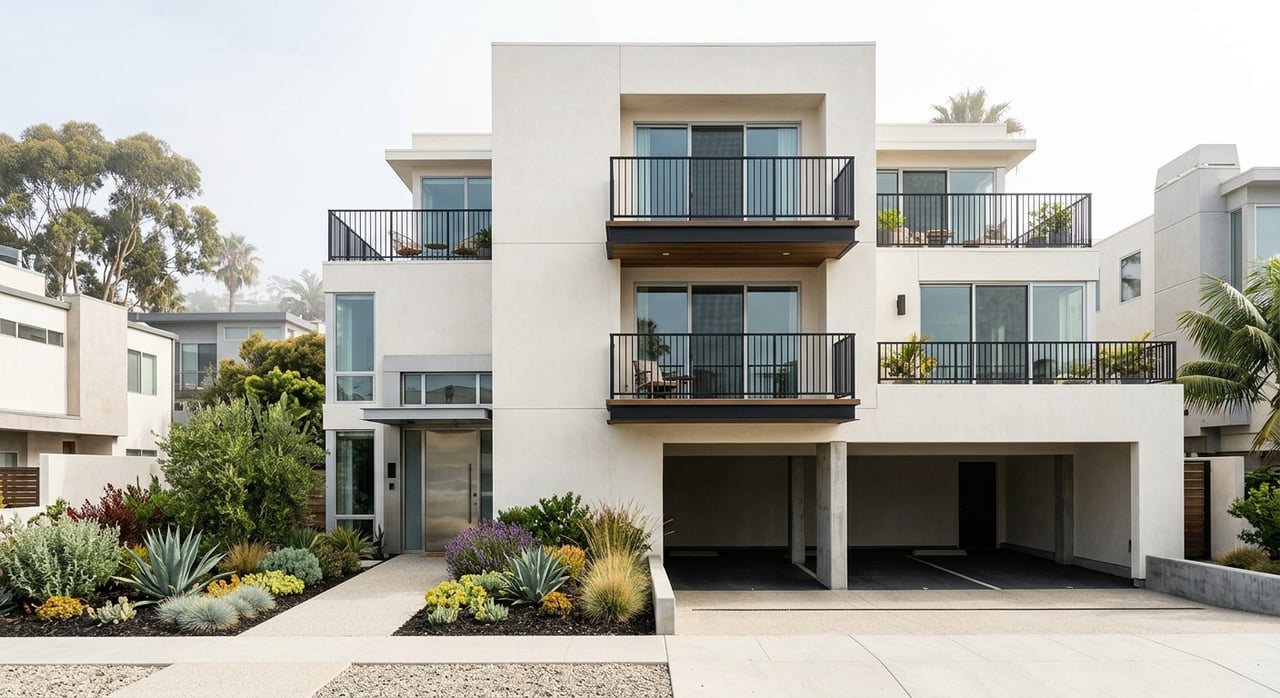
Your Guide to Buying a Condo or Townhome in Hermosa Beach
May 14, 2026
May 14, 2026
Dreaming about owning in Hermosa Beach, but not sure whether a condo or townhome is the better fit? You are not alone. In a compact coastal market where parking, HOA rules, views, and location can shape your day-to-day life as much as square footage, buying attached housing takes a different level of care. This guide walks you through how condos and townhomes work in Hermosa Beach, what to compare before you write an offer, and which details can matter most for resale. Let’s dive in.
Hermosa Beach is a small coastal city of about 1.4 square miles with nearly 20,000 residents. A large share of its most beach-oriented housing sits in or near the coastal zone, which extends inland to Ardmore Avenue. That helps explain why many condo and townhome options are tied closely to beach access, walkability, and coastal lifestyle.
The city’s coastal zone includes the downtown core, civic center area, neighborhood commercial areas, and a mix of residential uses from small multifamily buildings to larger apartment complexes. For you as a buyer, that means attached housing is not just a side category here. It is a meaningful part of the local market.
While the city does not formally label condo and townhome districts, current inventory suggests a few repeat locations. You will often see attached homes along the Strand and beachfront edge, near Hermosa Avenue and Pacific Coast Highway, around Ardmore Avenue, and on side streets such as 1st, 2nd, 7th, 15th, Herondo, Prospect, and Aubrey.
These areas can feel very different from one another. A unit near the Strand may trade heavily on beach access and view potential, while a home near Pacific Coast Highway may offer strong convenience and access but a different noise profile. That is why the exact block and building can matter just as much as the city name.
Beach-close condos tend to attract buyers who want immediate access to the shoreline, pier area, and coastal views. In these locations, pricing can rise quickly based on view quality, building placement, and parking.
Because public ocean views are especially prominent along the Strand, the beach, and Hermosa Pier, homes with stronger view lines may hold a different resale position than units with only partial glimpses. If views matter to you, it is worth evaluating them in person rather than relying on listing photos alone.
Pacific Coast Highway is one of the city’s main entry and pass-through routes. Attached homes along PCH and nearby Hermosa Avenue often appeal to buyers who value quick access, a central location, and walkability to commercial areas and the beach.
That convenience can be a real advantage, but it should be weighed against your preferences for privacy and interior quiet. In Hermosa Beach, location benefits often come with tradeoffs, and attached housing makes those tradeoffs more visible.
The right choice often comes down to how you want to live, not just what you want to spend. In Hermosa Beach, condos are often the lower-entry path into the market, while townhomes can skew larger, newer, and more view-oriented.
Current market data shows an overall median sale price of $1.8 million in Hermosa Beach. The current median for condo and co-op properties is $834,500, while the median for townhouses is $2.5125 million. Current inventory also shows a condo median listing price around $700,000 in 90254 and a townhouse median listing price around $2.29 million, though these figures can shift quickly in a small inventory pool.
| Property type | Current pricing snapshot | What it often means for buyers |
|---|---|---|
| Condo/co-op | Median sale price: $834,500 | Lower entry point for Hermosa Beach ownership |
| Townhouse | Median sale price: $2.5125 million | Often larger or more premium in location, layout, or views |
| Single-family home | Median sale price: $2.1 million | Useful comparison point, but not always cheaper than townhomes |
The big takeaway is simple: do not assume a townhome will cost less than a house here. In the current data, the townhouse median is actually above the single-family median, which reflects how many Hermosa Beach townhomes are positioned in the market today.
If you buy in a common interest development in California, you automatically become part of the homeowners association. The California Department of Real Estate notes that the HOA is not an optional extra. It is part of what you own.
That matters because your monthly dues, building rules, reserve strength, and maintenance structure all affect the real cost of ownership. When you compare two similar-looking properties, the better value is not always the one with the lower list price.
Current Hermosa Beach listings show HOA dues ranging from about $80 on one newer townhome to $1,279 on a beachfront Strand condo. Other examples in current inventory include dues around $329, $420, $521, and $570.
That wide spread usually reflects differences in amenities, building size, age, and services. Some buildings include features such as pools, spas, BBQ areas, fitness rooms, elevators, bike storage, gated garages, rooftop decks, or private entries.
Before you move forward, review the HOA package closely. Focus on the monthly dues, what they cover, any rules that affect your use of the property, and the overall health of the association.
A smart review checklist includes:
In Hermosa Beach, parking is one of the most important filters for attached-home buyers. The city states that residential parking permits do not guarantee a space and operate on a first come, first served basis. Street sweeping, metered areas, and time limits also shape the parking experience.
That is why you should never assume street parking will fill the gap if a unit comes up short. In real life, the difference between one assigned space and two secure garage spots can affect your routine every single day.
Current listings show a broad range. Some units offer one assigned parking space, some have two garage spots, and some detached townhomes offer four garage spaces.
When you tour a property, get specific. Ask whether the parking is deeded, assigned, tandem, guest-only, or shared in some other way.
Use this quick checklist:
In Hermosa Beach, renovation plans are not always as simple as they sound on paper. Because much of the city lies in the coastal zone, certain future changes may require additional approvals.
Under the Local Coastal Plan, development that increases floor area or height by more than 10%, changes use, or otherwise affects coastal resources may require a Coastal Development Permit after city concept approval. If you are thinking ahead about adding rooftop features, expanding, or changing exterior elements, that should be part of your buying decision now.
This is especially important with townhomes and condos where exterior changes may already be limited by the HOA. In some cases, you may need to satisfy both association requirements and city coastal rules.
If you are hoping to offset costs with short-term rental income, be careful. Hermosa Beach defines a short-term vacation rental as a stay of less than 30 consecutive days, and the city states that these rentals are prohibited in all residential zones citywide.
The city also notes that short-term rentals are allowed only in certain nonconforming residential dwellings on parcels zoned C-2, C-3, SPA 7, SPA 8, or SPA 11. For most condo and townhome buyers, the practical takeaway is clear: do not assume Airbnb-style income is allowed.
If rental potential matters to you at all, confirm the exact parcel status and zoning in writing before you rely on it. In Hermosa Beach, short-term rental eligibility should be treated as an exception, not the default.
In any market, resale matters. In Hermosa Beach, attached-home resale tends to be shaped by a few practical features that buyers care about again and again.
The most defensible features are often the simplest ones: reliable parking, solid building quality, low-maintenance exteriors, sensible HOA dues, and view lines that feel more durable over time. In a coastal market with tighter permitting rules, future flexibility can also influence long-term appeal.
Hermosa Beach has important public viewpoints and view corridors with long-range views of Santa Monica Bay, the Palos Verdes Peninsula, the Santa Monica Mountains, and the Los Angeles Basin. Pacific Coast Highway is also identified as an important view corridor.
For you as a buyer, that means a true beach, Strand, pier, or corridor view may carry a different resale profile than a partial ocean glimpse. It is a smart idea to compare what you can actually see from the unit itself, including from main living spaces and outdoor areas.
Before you buy a condo or townhome in Hermosa Beach, slow the process down enough to verify the details that matter most. The right unit is not just the one that photographs well. It is the one that fits how you plan to live.
Use this checklist as you narrow your options:
Buying attached housing in Hermosa Beach can be a great way to enjoy the South Bay lifestyle, but the best decision usually comes from careful comparison, not quick assumptions. If you want help sorting through buildings, HOA details, parking tradeoffs, or resale considerations, the Yamada Clayton Realty Team is here to guide you with local insight and a steady, personalized approach.
We pride ourselves in providing personalized solutions that bring our clients closer to their dream properties and enhance their long-term wealth. We strive to educate and empower our neighbors and clients in making one of their biggest investments, purchasing or selling a home.