Palos Verdes Estates Home Sale Compliance: What to Check
August 13, 2026
August 13, 2026
Most sellers assume the slowest part of a home sale is the buyer's mortgage underwriter, or maybe the appraiser, or a slow-moving title company. In Palos Verdes Estates, the real bottleneck is often none of those. It's a six-member volunteer board that traces its authority back to 1923, meets biweekly in a small office on Palos Verdes Drive West, and can hold up your escrow over a fence, a paint color, or a skylight you never even knew was there.
That board is the Art Jury, and if you're selling or buying in Palos Verdes Estates, understanding what it actually controls matters more than another rundown of median prices.
The Palos Verdes Homes Association, the private nonprofit that administers the Art Jury, predates the city of Palos Verdes Estates itself. Its authority comes from the original 1923 Palos Verdes Trust Indenture, not from anything the city council can amend. Every property owner in Palos Verdes Estates and the Miraleste section of Rancho Palos Verdes is automatically a member, and that membership, along with the obligation to get approval before changing anything visible on the exterior of your home, transfers with the deed whether you knew about it at closing or not.
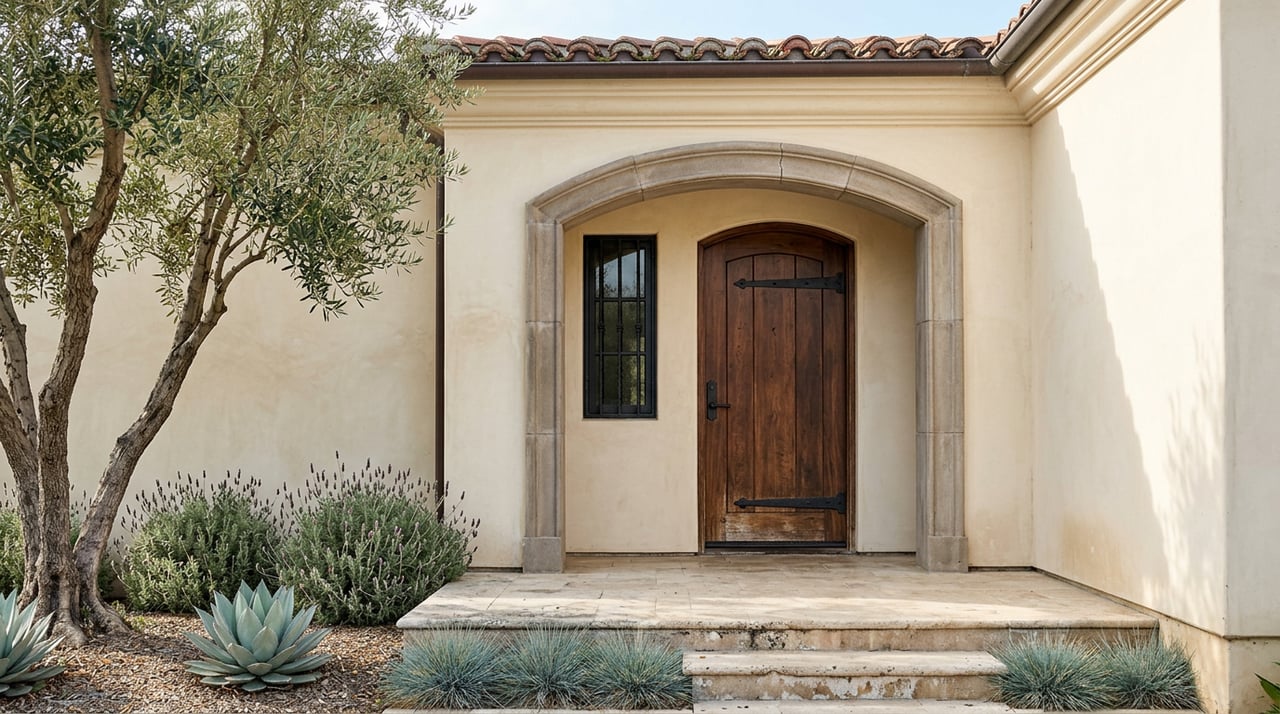
The scope is wider than most buyers expect. It's not just additions and second stories. Roofing, siding, windows and doors, fences, walls, hedges, landscaping, and even a repaint in a different shade all fall under review. PVHA's own documents divide the community into architectural districts, with Type I defined as its own distinctive "Californian Architecture." The design standards get remarkably granular from there: one guideline allows roof pitches as steep as 60 degrees only when the slope won't clash with neighboring rooflines, and plumbing vents have to be grouped and concealed from view rather than left scattered across a roof. Most homeowners associations in the South Bay regulate paint colors and fence heights. Few of them regulate architectural style down to vent placement and enforce it through a body with the standing to place a lien on your title.
Here's the part that catches sellers off guard: Art Jury approval and a City of Palos Verdes Estates building permit are two separate, non-substitutable tracks. The city reviews zoning, setbacks, and safety. The Art Jury reviews everything about how the project looks. You need both, and they run on different clocks.
Review fees, paid directly to the association and separate from any construction or architectural cost, have historically run from roughly $1,000 to $15,000 depending on the size of the project, according to a South Bay general contractor who has worked with the Art Jury for two decades. Current thresholds should always be confirmed directly with PVHA, since fee schedules and forms change.
Timelines vary just as widely:
| Project type | Typical Art Jury timeline |
|---|---|
| Minor work (paint, fencing, small landscaping) | 2 to 8 weeks from a complete submittal |
| Major work (second stories, new construction, grading) | 3 to 9 months or more, often across multiple review cycles |
If you're planning to list in 60 days and your home has a second-story addition that was never fully approved, that math doesn't work. The Art Jury doesn't accelerate for a pending sale.
The part of this system that surprises people most isn't the review process for new work. It's what happens with old, undocumented work.
PVHA's own FAQ page walks through a real scenario: a homeowner notices a neighbor's skylight and wonders why the Art Jury rejected the same request for them. The association's answer is candid. Sometimes the earlier skylight was installed without approval in the first place, which puts that property in a state of noncompliance that nobody catches because the association doesn't have field investigators. As PVHA puts it, these situations are typically resolved "at the time of sale when properties are usually required to be brought into compliance by the buyers."
That single sentence is the whole risk in miniature. If a prior owner added a patio, changed a fence, or altered windows without Art Jury sign-off, that liability doesn't disappear when the property changes hands. It transfers to whoever buys it next, unless it gets resolved before closing.
This isn't hypothetical. A March 2026 ABC7 Los Angeles investigation into homeowner complaints about the Art Jury included a resident facing more than $10,000 in penalties for items installed on his property before he bought it, two years earlier. Another homeowner, Jim Sheriff, described the scope of what gets reviewed in blunt terms:
"They will regulate things that are not visible to any neighbor, anybody, and they can't see."
Unresolved violations aren't just an inconvenience. Real estate attorneys and local practitioners note that a violation can result in the association placing a lien on the property, which can cloud title for a subsequent sale or refinance. That's a title problem, not a design disagreement, and title problems are the kind of thing that stall or kill escrows.
Anyone comparison-shopping Palos Verdes Estates against other Peninsula cities has probably already seen wildly different numbers depending on which site they're looking at. One widely used real estate data source put the average Palos Verdes Estates sale price around $2.73 million as of July 2026, up 11.7% year over year, with homes going pending in an average of 46 days. A different housing market tracker, using February 2026 figures, showed a median sale price of $2.435 million, a much longer median of 99 days on market, 7.4 months of supply, and a sale-to-list ratio that had slipped to 97.69%, with zero homes selling over asking that month compared to 20% a year earlier.
Those numbers come from different months and different methodologies, so some of the gap is simply seasonal. But the spread itself is worth sitting with. A market where "days on market" can plausibly be reported as either 46 or 99 depending on the source is a market where the average is quietly blending two very different seller experiences: listings that go out the door with clean paperwork, and listings that sit while an owner scrambles to document, correct, or get retroactive approval for work nobody thought to check on before putting up a sign. Price reductions climbing from roughly 11.6% to 16.2% of listings over the same window is consistent with that story. Sellers who discover a compliance issue after they've already listed often end up cutting price to compensate for the delay rather than pulling the listing to fix it properly.
None of this means every slow sale in Palos Verdes Estates traces back to the Art Jury. It does mean that a seller who assumes their home will move at the same pace as a comparable listing in a South Bay city without a private architectural review board is skipping a step that's specific to this ZIP code.
It's worth being precise about what makes Palos Verdes Estates different, because neighboring Peninsula cities regulate this territory in entirely different ways.
Palos Verdes Estates has no municipal view ordinance at all. Its restrictions are architectural, run by the private Art Jury, and have nothing to do with guaranteeing anyone's ocean view. Rancho Palos Verdes is the opposite case. Its view protection framework dates to a 1989 ballot measure, Measure M, and a legal dispute stemming from a 1997 permit application, Echevarrieta v. City of Rancho Palos Verdes, upheld the city's authority to order a homeowner's trees pruned to restore a neighbor's view, with the court noting that foliage in place before the ordinance took effect gets a different baseline than foliage planted afterward. The city of Rolling Hills runs a narrower version still, with a 1993 View Preservation Ordinance that defines a protected view specifically as a scene of the ocean, offshore islands, city lights, the Palos Verdes Hills, or the harbor. A Los Angeles Superior Court ruling in the case Hall v. City of Rolling Hills, decided in December 2012, made clear that ordinance preserves an existing view rather than creating a new one for someone who never had it in the first place.
Three cities, three different regimes, and a buyer moving between them needs to ask a completely different set of questions in each one. In Palos Verdes Estates, the question isn't "will my view be protected." It's "will my fence, my roofline, or my repaint clear a board that's been doing this since before the city existed."
For sellers, the fix is mostly about sequencing.
For buyers, the parallel move is to request Art Jury and permit records during due diligence rather than assuming a polished exterior means a clean file.
Does the Art Jury apply outside Palos Verdes Estates itself? Yes, in the Miraleste neighborhood of Rancho Palos Verdes, which was part of the original Palos Verdes Project and remains under PVHA and Art Jury jurisdiction even though it sits within a different city's boundaries.
Can an old violation really affect my title? It can. A recorded violation of the association's restrictions can result in a lien, which is a title matter that surfaces during escrow and needs to be cleared before a sale or refinance can close cleanly.
Is a simple repaint really subject to review? Generally yes, if the new color falls outside a previously approved palette for your home. Repainting in the same or a compatible color scheme tends to move faster, but any real change typically requires review.
Selling or buying in Palos Verdes Estates rewards the kind of preparation that has nothing to do with staging or curb appeal in the usual sense. It means knowing which papers are in your file before a buyer's agent asks for them. Yamada Clayton has spent years walking South Bay clients through exactly this kind of local detail, from estate transitions in Torrance to compliance questions unique to the Peninsula. If you're weighing a move in Palos Verdes Estates, request a personalized home valuation and we'll walk through what your specific property's history looks like before you list.
We pride ourselves in providing personalized solutions that bring our clients closer to their dream properties and enhance their long-term wealth. We strive to educate and empower our neighbors and clients in making one of their biggest investments, purchasing or selling a home.