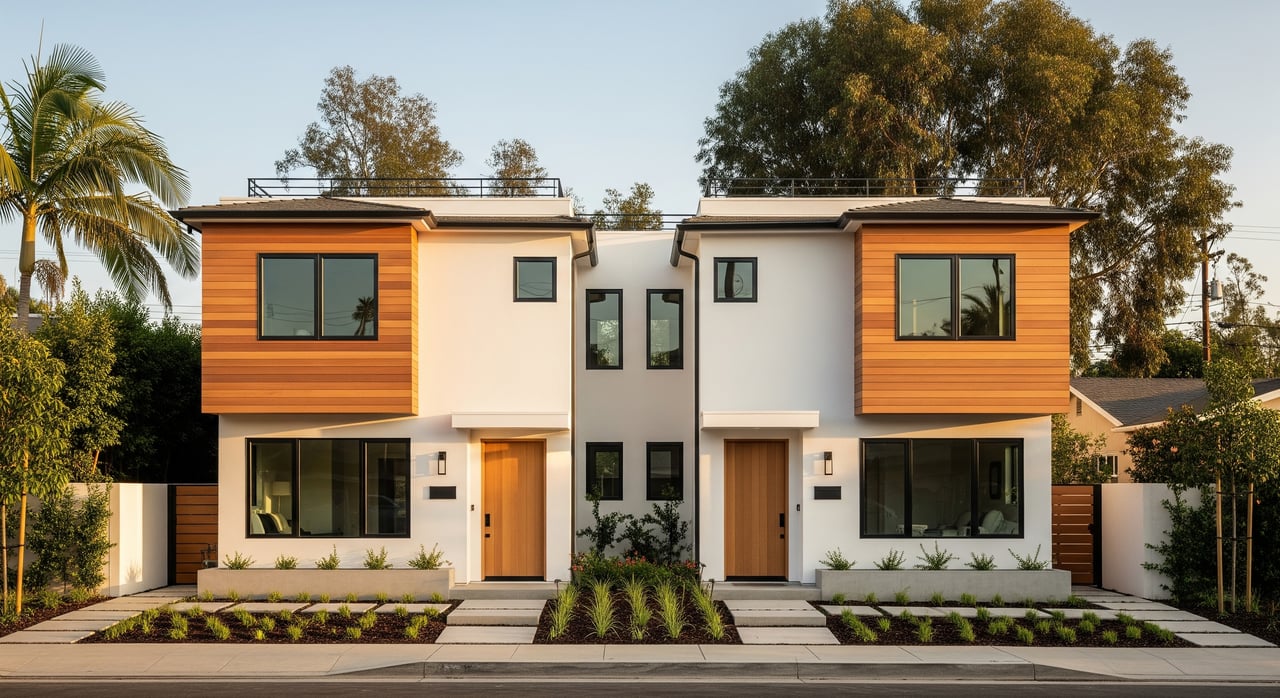
What if your next home also paid part of your mortgage? In Gardena and the South Bay, duplexes can help you offset housing costs, build equity, and create a long-term income stream. Whether you plan to house-hack or buy as a pure investment, you want a clear framework that fits our local market and rules. In this guide, you’ll learn how to underwrite a Gardena duplex, choose financing, understand rent protections, and run a realistic pro forma you can stress-test. Let’s dive in.
Why Gardena duplexes appeal
Gardena sits at the center of key South Bay job corridors with access to Torrance, El Segundo, Long Beach, and central Los Angeles. Employers in logistics, aerospace, manufacturing, healthcare, and services draw steady renter demand. Proximity to LAX, major freeways, and transit helps keep units competitive when positioned and priced correctly.
On the supply side, small multifamily is a limited resource in many South Bay neighborhoods. Duplexes benefit from this scarcity, and some parcels allow two units under local zoning. State housing laws have also shaped how lot splits and duplex opportunities may be created, though implementation varies by city. Always confirm Gardena’s current zoning and any lot split rules with the Planning & Building Division before you pursue a value-add or redevelopment angle.
Key takeaway: Demand is diversified and steady, but purchase pricing can be tight. The numbers must pencil, and your plan should account for conservative cash flow at the start.
Cash flow basics you’ll use
Before you look at a single property, get comfortable with the core metrics. You’ll use these to screen deals, compare options, and talk with lenders.
- Gross Scheduled Rent (GSR): Total rent at full occupancy.
- Effective Gross Income (EGI): GSR minus vacancy/credit loss plus any other income (parking, laundry).
- Net Operating Income (NOI): EGI minus operating expenses (taxes, insurance, maintenance, utilities the owner pays, management).
- Cap Rate: NOI divided by purchase price. Useful for comparing properties at a glance.
- Gross Rent Multiplier (GRM): Purchase price divided by GSR. A quick filter to screen deals.
- Debt Service Coverage Ratio (DSCR): NOI divided by annual debt payments. Lenders often look for DSCR above roughly 1.2 to 1.25 on investor loans.
- Cash-on-Cash Return: Cash flow after debt service divided by your total cash invested (down payment, closing costs, initial reserves/rehab).
Build a Gardena pro forma
Use conservative assumptions, then stress-test them. Here is an illustrative example to show the process. Plug in live numbers from recent sales and current rent comps when you are ready to model your target property.
- Hypothetical purchase price: $900,000
- Rents: Unit A at $2,200, Unit B at $2,300. GSR = $4,500 per month or $54,000 per year.
- Vacancy/credit loss: 6% of GSR = $3,240. EGI ≈ $50,760.
- Property tax: Start with about 1.0% to 1.3% of assessed value in LA County; model 1.1% here = $9,900.
- Insurance: Model $1,800 per year for a small duplex policy. Costs vary.
- Maintenance: 5% of GSR = $2,700.
- Management: 8% of EGI = $4,060. Even if you self-manage at first, it’s smart to budget as if you will hire this out.
- Owner-paid utilities: Model $1,200 per year if you expect to cover shared water/trash.
NOI ≈ $50,760 minus $19,660 = about $31,100. At a $900,000 price, the cap rate is roughly 3.5%. With higher leverage and today’s rates, debt service can exceed NOI, so initial cash flow may be thin or negative. That means your strategy should lean on principal paydown, appreciation, forced appreciation through improvements, or tax planning as part of the return stack.
Stress-test the numbers
Model the downside before you buy.
- Reduce rents by 10% to 15% and increase vacancy by 2 to 5 points. Can you still cover expenses?
- Increase insurance and maintenance reserves for older buildings.
- Add a capital expenditure line. For older duplexes, set aside 5% to 10% of gross rent, or $250 to $500 per unit per month, for systems and big-ticket items.
- Test a refinance case after you improve units and stabilize rents. What DSCR and cash-on-cash do you need to hit to justify a cash-out refinance?
Financing paths for duplex buyers
Your plan and occupancy will guide the loan options you consider.
- Owner-occupied residential loans (1 to 4 units): FHA allows lower down payments for qualified borrowers on owner-occupied properties. Conventional loans may require higher down payments on 2-unit properties. Down payment requirements and mortgage insurance rules change, so get live quotes from lenders early.
- Non-owner-occupied investment loans: Expect 20% to 25% down or more. Lenders will underwrite to DSCR and your overall credit profile.
- Portfolio, bridge, or DSCR lenders: If you need flexibility or you focus on cash-flow underwriting, local banks, credit unions, or private lenders may offer products not tied to agency guidelines.
House-hacking advantage
If you live in one unit, you can access owner-occupied financing and use the other unit’s rent to offset your monthly payment. This can also reduce your effective vacancy risk. Over time, you can stabilize rents, consider value-add updates, and plan for a refinance to pull out equity or lower your payment.
Rent rules and tenant protections to know
California’s Tenant Protection Act (often referred to as AB 1482) applies to many residential units. It generally caps rent increases each year at 5% plus CPI or 10%, whichever is lower, and adds just-cause eviction rules. Some properties are exempt, including certain newer buildings and select single-family dwellings under specific conditions. Duplexes may or may not be covered depending on ownership and occupancy. Always verify whether a particular duplex is subject to AB 1482 and review any local ordinances that may apply.
Gardena does not have the same rent stabilization ordinance as the City of Los Angeles, but statewide rules still matter. When you review a potential purchase, confirm the rent-control status, lease expirations, and whether tenants are on month-to-month or fixed terms. The legal framework affects your near-term rent growth and your value-add timeline.
Zoning, permits, and SB9
Duplexes are typically allowed in multi-family zones such as R2 or comparable designations. State laws like SB9 changed how lot splits and duplex creation can work, but each city implements them differently. Before you buy with an expansion or redevelopment plan, check Gardena’s zoning map, permitted uses, parking rules, and any SB9 or SB10 programs with the Planning & Building Department. Also verify whether any existing work is permitted and whether the property’s current use matches its certificate of occupancy.
Due diligence checklist
Request full documentation and inspect the property thoroughly. A clean file supports better underwriting, smoother financing, and fewer post-close surprises.
- Income and lease file: Rent roll, leases, security deposits, concessions, and rent-control status.
- Expense history: Last 12 to 24 months of utilities, insurance, taxes, maintenance, and any management fees.
- Permits and compliance: Certificate of occupancy, building permits, and any notices of violation. Watch for unpermitted conversions.
- Physical inspections: General inspection, roof, foundation, plumbing and sewer lateral, electrical, HVAC, pest/termite, and environmental checks for older buildings.
- Utilities and parking: Separate meters vs shared, who pays which utilities, and how parking is allocated.
- Taxes and assessments: Confirm assessed value assumptions and check for special assessments or liens.
House-hacking vs pure investment
Both paths can work in Gardena, but they deliver returns differently.
- House-hacking: Lower down payment options, partial rent offset for your housing cost, easier vacancy risk management, and a path to refinance after stabilization. It is a lifestyle choice too, since you will live on-site.
- Pure investment: Higher down payment and stricter DSCR targets. You will be more sensitive to initial cap rate and current interest rates. You will rely on professional leasing and management, value-add improvements, and tax strategy to hit return goals.
In either case, plan for modest initial yield by South Bay standards and build your upside through improvements, rent optimization where allowed, and disciplined expense control.
Step-by-step plan for first-time duplex buyers
Follow a simple workflow to move from interest to confident action.
- Market reconnaissance
- Pull 12 to 24 months of duplex sales in Gardena and nearby South Bay cities. Focus on condition, unit mix, parking, and whether units were delivered vacant or tenant-occupied.
- Build unit-level rent comps for similar bedroom counts within a 0.5 to 1-mile radius, adjusting for condition and amenities.
- Build your pro forma
- Use conservative assumptions for vacancy and expenses. Include realistic property taxes based on the expected purchase price, and budget for higher insurance and earthquake coverage as needed.
- Add separate reserves for capital expenditures. Stress-test for rent softness and longer turnover times.
- Meet lenders early
- Decide if you will occupy a unit or purchase as an investor. Owner-occupied eligibility changes your down payment, rate, and mortgage insurance.
- Collect quotes for fixed and adjustable products and compare payments and DSCR.
- Assemble your decision team
- Work with a multifamily-aware buyer’s agent who can source real-time comps, flag unpermitted work risk, and negotiate terms that protect your interests.
- Speak with a tax professional or CPA about depreciation, 1031 exchange planning, and optimal ownership structures.
- Diligence and contingencies
- Request complete financials and all permits. Do unit-by-unit walkthroughs to confirm habitability and scope any value-add plan.
- Use inspection results to refine your budget and, if needed, renegotiate or request credits.
- Hold and exit plan
- Decide if your target is long-term hold with gradual improvements, a house-hack with a later refinance, or a shorter value-add execution. Set clear milestone metrics for DSCR, cash-on-cash, and reserves.
Returns in the South Bay context
Cap rates in Los Angeles County are often compressed relative to many other markets. That means your first-year cash flow may be thin, especially with higher interest rates. It does not mean duplex investing is off the table. It means your return profile is a blend of components:
- Principal paydown from each mortgage payment.
- Modest rent growth where allowed under applicable rules.
- Forced appreciation through unit upgrades, utility billing clarity, and better expense control.
- Strategic refinancing once NOI improves.
If you underwrite carefully, buy in line with true rents and condition, and plan for reserves, you can make a Gardena duplex a reliable wealth-building asset over time.
How our team helps you compete
You deserve guidance from a local team that understands South Bay neighborhoods, duplex underwriting, and how to present strong offers. We help you:
- Identify the right duplex targets and read between the lines on listings and disclosures.
- Pull investor-level comps and sanity-check rent assumptions.
- Navigate inspections, permits, and negotiation points that matter for small multifamily.
When you are ready, we will tailor a plan to your goals, whether that is a first house-hack or a long-term portfolio addition.
Ready to run the numbers on a specific property or build a short list of duplex opportunities in Gardena? Connect with the Yamada Clayton Realty Team to get a clear plan and next steps.
FAQs
How do I estimate cap rate on a Gardena duplex?
- Divide your projected NOI by the purchase price; use conservative vacancy and expense assumptions and verify tax, insurance, and any owner-paid utilities.
Does California’s AB 1482 rent cap apply to duplexes?
- It applies to many residential units with some exemptions; confirm applicability for each property and review leases, exemptions, and just-cause rules before you model rent growth.
What down payment do I need if I live in one unit?
- Owner-occupied options can allow lower down payments compared with investment loans; get live quotes from lenders because minimums and mortgage insurance rules vary by program.
How much should I budget for repairs and reserves?
- A common approach is 5% to 10% of gross rent for maintenance plus a separate capital reserve, often $250 to $500 per unit per month for older buildings.
Where can I find reliable rent and sales comps for Gardena?
- Use recent MLS duplex sales for pricing bands and build unit-level rent comps within 0.5 to 1 mile; supplement with local property managers for on-the-ground rent insights.