The Depot Posted Its Farewell. Irving Gill's 1912 Torrance Is Still There to Walk.
October 22, 2026
October 22, 2026
The Depot at 1250 Cabrillo Avenue has posted a farewell on its website. It announces a last meal "as of September 30th" and a parking-lot sale of memorabilia. The restaurant opened in October 1991 with Michael Shafer as chef, inside the Pacific Electric Railway depot that architect Irving Gill designed and finished in 1912.
Gill was hired to design the town itself, and most of what he built here has been demolished or altered. Of the few Gill structures still standing, the depot is the one that has spent the past 35 years as a dining room anyone could walk into. With the restaurant's farewell posted, the rest of Gill's Torrance has to be seen from the outside: a bridge you drive under, a hotel that has been changed, a residential block, and a street plan.
In the spring of 1912, Gill beat four other architects for the job of chief architect for Torrance, which founder Jared Sidney Torrance's Dominguez Land Co. was then developing, according to a Daily Breeze history column. He spent the next year on his plans, often working with landscape architect Frederick Law Olmsted Jr. The city's 2026 historic preservation plan draft describes the Old Torrance core as an Olmsted Brothers planned town, split into industrial, commercial and residential zones around a central green, with Gill's bridge as its gateway.
The Red Car came first. In 1911, Torrance agreed to donate 125 acres to Pacific Electric for its railcar maintenance facilities. In return, Pacific Electric agreed to build a line into town. Gill's depot served passengers on that Torrance spur off the larger Gardena line, the Daily News reported.
Gill liked concrete because it was sturdy, easy to mold and fireproof. The Daily Breeze column notes that a September 15, 1912, Los Angeles Times story on the new development ran under the headline "Southland City That Will Boast None But Fireproof Buildings." For a town built to last, the losses since then are steep.
| Structure | Location | Built | Status |
|---|---|---|---|
| Pacific Electric depot | 1250 Cabrillo Ave | 1912; the city's 2026 preservation plan draft says 1913 | Standing; The Depot restaurant since October 1991 |
| Pacific Electric railroad bridge | Torrance Blvd, west of Western Ave | 1913 | Standing; on the National Register since July 13, 1989 |
| Brighton Hotel | Cabrillo Ave | Not stated | Standing in altered form |
| El Roi Tan and Murray hotels | Across from the depot | Not stated | Demolished |
| First National Bank of Torrance | Torrance | Opened 1913 | Not surviving |
| Hendrie Rubber Tire Co. | Border Ave | 1911 | Original plant not surviving |
| Model worker homes | 1800 and 1900 blocks of Gramercy Ave | Begun 1912 | About 10 built |
Laid out together, Gill's commercial downtown has been reduced to two working pieces of transit infrastructure and one hotel. The depot is the only one of the three whose interior has been part of ordinary life in Torrance for a generation.
The depot's survival was never a given. When the Red Car lines to the South Bay began shutting down in the 1940s, the building lost its purpose, and by the late 1980s it had fallen into disrepair. Southern Pacific, which owned it at the time, turned down several bidders. In 1986 it finally sold to developers Capellino and Associates, who had interested Chez Melange restaurateurs Robert Bell and Michael Franks in opening a restaurant there, according to the Daily News history.
It took five years from that sale to the restaurant's opening in October 1991. Since then, The Depot has given a Gill building a daily use, which is the reason the city's historic resource survey can still list 1250 Cabrillo as a contributor. The survey labels it an "Altered-contributor" in a Mission/Modern style and calls it the most significant structure in the Olmsted Tract.
Here is how the chef put it in the farewell:
"We watched my kids and yours grow up at the Depot. We enjoyed birthdays, anniversaries, births, and memorials as a family and community."
The notice invites guests to stop by, say goodbye and "raise one more glass" to the staff. It says nothing about what comes next for the building.
Gill's other surviving landmark is the one most of Torrance passes every week without thinking about it. The Pacific Electric railroad bridge over Torrance Boulevard, west of Western Avenue, carried workers across the busy street to the big new factories just north of the city center, including Union Tool Co. and Llewellyn Iron Works, according to the Daily Breeze.
The city's September 2026 General Plan draft says the bridge was designed as both the literal and symbolic gateway to Torrance, "a function it still fulfills with grace and distinction." Only three Torrance properties are on the National Register of Historic Places: the bridge, Torrance High School and Fern Avenue School. The depot is not one of them. Both the bridge and the Pacific Electric station carry bronze plaques from the Torrance Historical Society's landmark program, which the Society started in 1983.
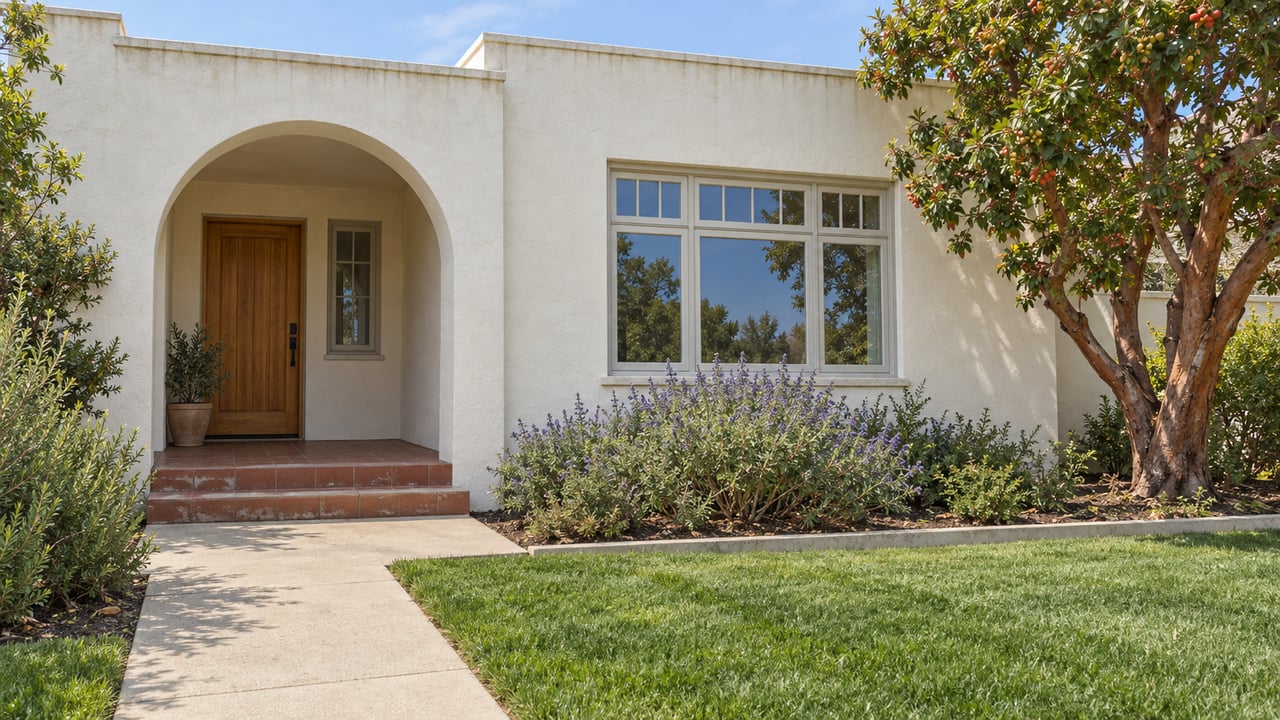
Gill's plans for the residential district show where his vision stopped working. He meant to build 100 model homes for factory workers south of downtown, designed for "privacy and cleanliness," as he told the Los Angeles Herald in 1912. Each house had one windowless wall facing the windowed side of the next house. Inside, some concrete floors curved up into the walls so there were no crevices, and there were no baseboards, moldings or exposed beams.
Starting in 1912, about 10 were built on the 1800 and 1900 blocks of Gramercy Avenue. Then the plan stalled. The Daily Breeze reports that the families they were meant for found the houses too plain and nowhere near fancy enough. These are private homes on residential blocks, so a walk down Gramercy means staying on the sidewalk.
The Torrance Historical Society runs a free, docent-led Walking Tour of Historic Old Torrance on the fourth Sunday of each month from May through October. The final 2026 tour is Sunday, October 25, at 10:30 a.m.
The meeting point is part of the story too. The Historical Society's plaque list identifies 1345 Post Avenue as the Torrance Public Library, which served that purpose from 1936 to 1978. After the tour wraps for the season, the museum lists public hours of noon to 4 p.m. on Wednesdays, Thursdays and Sundays. Calling ahead before a weekday visit is a good idea.
To see Gill's surviving work on your own, start at the depot on Cabrillo, pass the Brighton Hotel on the same avenue, head out Torrance Boulevard to the bridge west of Western, and finish on the 1800 and 1900 blocks of Gramercy Avenue.
Many older Old Torrance homes sit on streets laid out under the Olmsted plan, and that history can shape how a house is presented when it sells. If you own one and want to know where it stands today, Kevin Yamada and the Yamada Clayton team are glad to walk through it with you. Request a Personalized Home Valuation, and we'll include the story of your block.
We pride ourselves in providing personalized solutions that bring our clients closer to their dream properties and enhance their long-term wealth. We strive to educate and empower our neighbors and clients in making one of their biggest investments, purchasing or selling a home.